When the medical plan should pay, bill the medical plan
Some procedures performed in dental offices are covered by the patient’s medical insurance — trauma, biopsies, pathology, TMD treatment, oral appliance therapy and certain services tied to medical treatment. Billing them correctly takes different codes, forms and documentation.
- CDT ↔ CPT/HCPCS cross-coding with ICD-10-CM diagnoses
- CMS-1500 (837P) medical claims and medical prior authorization
- Medicare dental (KX/GY) and oral appliance therapy (E0486) rules
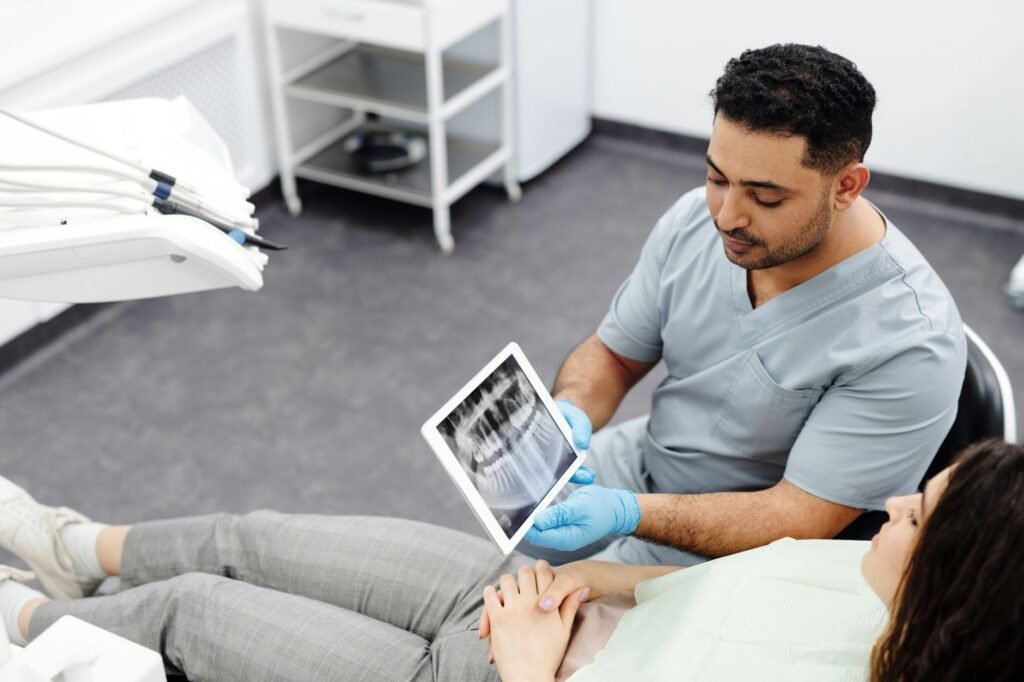 Photo: Cedric Fauntleroy / Pexels
Two code systems, two claim forms
Dental claim
Codes: CDT (D-codes)
Diagnosis: optional for most plans (required on Medicare dental claims)
Form: ADA Dental Claim Form / X12 837D
Rules: frequencies, maximums, alternate benefits
Medical claim
Codes: CPT and HCPCS Level II (e.g., E0486)
Diagnosis: ICD-10-CM required and must support medical necessity
Form: CMS-1500 / X12 837P
Rules: medical necessity, prior authorization, network status
Procedures that commonly cross over
Coverage always depends on the patient’s medical policy and documentation.
| Scenario | Medical codes commonly involved (examples) | Diagnosis examples (ICD-10-CM) |
|---|---|---|
| Oral appliance therapy for OSA | HCPCS E0486 (custom oral appliance) — Medicare requires KX/NU modifiers when LCD criteria are met | G47.33 obstructive sleep apnea (diagnosed by a physician) |
| Trauma to teeth/jaw | E/M 99202–99215, fracture care e.g. 21450–21470 (mandible), imaging 70355 | S02.5XXA fracture of tooth, S03.2XXA dislocation of tooth (+ external cause codes) |
| Biopsy & pathology | e.g. 40808 biopsy of vestibule, 41100–41108 tongue/floor of mouth; pathology 88305 | Lesion-specific codes, e.g. K13.21 leukoplakia |
| TMD treatment | E/M, TMJ arthrocentesis 20605, imaging; orthotic coverage varies | M26.601–M26.609 TMJ disorder (laterality), M26.621–M26.629 arthralgia of TMJ |
| Bone grafting / reconstruction | e.g. 21210 (maxillary/malar graft), 21215 (mandible graft) when medically indicated | Atrophy, trauma or pathology codes supporting necessity |
| Pre-medical-treatment clearance | E/M and dental services linked to transplant, cardiac valve, cancer therapy, dialysis (Medicare rules apply) | Z01.818 pre-procedural exam + the underlying condition |
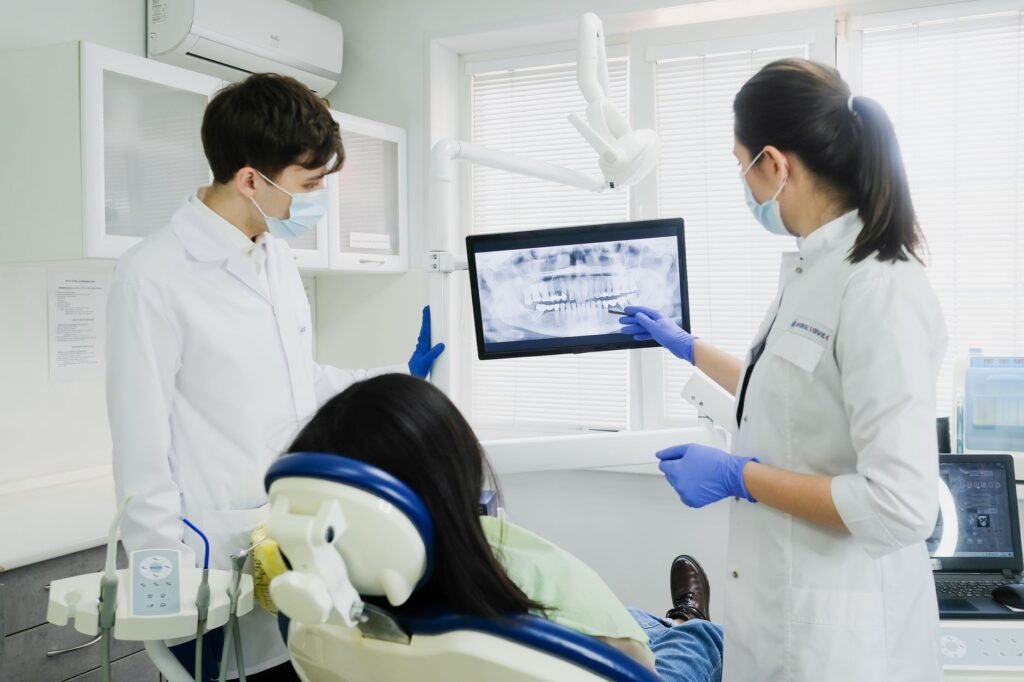 Photo: Nadezhda Moryak / Pexels
Medicare and dental services
Medicare Part B generally excludes routine dental care, but since 2023 CMS pays for dental services that are inextricably linked to the clinical success of certain covered medical services — for example, dental exams and treatment before organ transplants, cardiac valve replacement, and treatment for head and neck cancer, with later additions such as dialysis for end-stage renal disease.
Medicare-enrolled dentists use the KX modifier to show that the service meets those conditions (and that care was coordinated with the physician), or GY to show Medicare should not pay so a secondary payer can be billed. Diagnosis codes are required on these dental claims. The CY 2026 Physician Fee Schedule left payment for these dental services unchanged and added an oral-health improvement activity to MIPS for physicians — a further push toward medical-dental integration.
- Physician coordination documented before treatment
- Correct modifier (KX or GY) on each line
- ICD-10-CM diagnosis on the claim
- Medicare enrollment status of the dentist confirmed
- Oral appliance therapy: DMEPOS enrollment (CMS-855S), physician diagnosis and LCD L33611 criteria
Billing sleep apnea appliances correctly
- Physician diagnosisOSA diagnosed by a licensed physician from a sleep test the physician ordered; the dentist cannot order a Medicare-covered home sleep test.
- PrescriptionWritten order for an oral appliance from the treating physician.
- Qualified deviceA custom device listed with PDAC under code E0486.
- Supplier enrollmentDentist enrolled as a Medicare DMEPOS supplier for Medicare patients; commercial plans vary.
- ClaimE0486 with required modifiers and G47.33 on a CMS-1500/837P; CDT D9947–D9949 remain for dental-side documentation.
Dental-to-medical FAQ
Can every dental procedure be billed to medical insurance?
No. Medical plans pay for medically necessary services that their policy covers. Routine restorative and preventive dentistry are dental benefits. We assess each case before a claim is filed.
Do we need to be credentialed with medical plans?
Usually yes, to be paid in network. We can help with medical payer enrollment where it makes financial sense.
Is cross-coding allowed?
Yes, when the medical code accurately describes the service performed and the documentation supports medical necessity. It is never acceptable to re-label a dental service to obtain payment.
Why dental practices choose us
Six reasons practices across the US hand us their revenue cycle.
Dental-first specialists
Our team works only in dental revenue cycle — CDT, dental plans, Medicaid dental and the payers your practice actually bills.
Dental and medical billing
We bill the medical plan when it should pay — oral surgery, trauma, biopsies, TMD and oral appliance therapy — with compliant cross-coding.
AI-assisted, human-checked
Automation speeds verification, scrubbing and follow-up; experienced billers review every exception.
Transparent results
Monthly KPI reviews plus live verification and AR dashboards. You always see where every claim stands.
HIPAA-first operations
BAA with every client, named logins, MFA where supported and minimum-necessary access.
One team, full cycle
Verification, coding, claims, AR, denials, posting, patient billing and credentialing — no hand-offs between vendors.

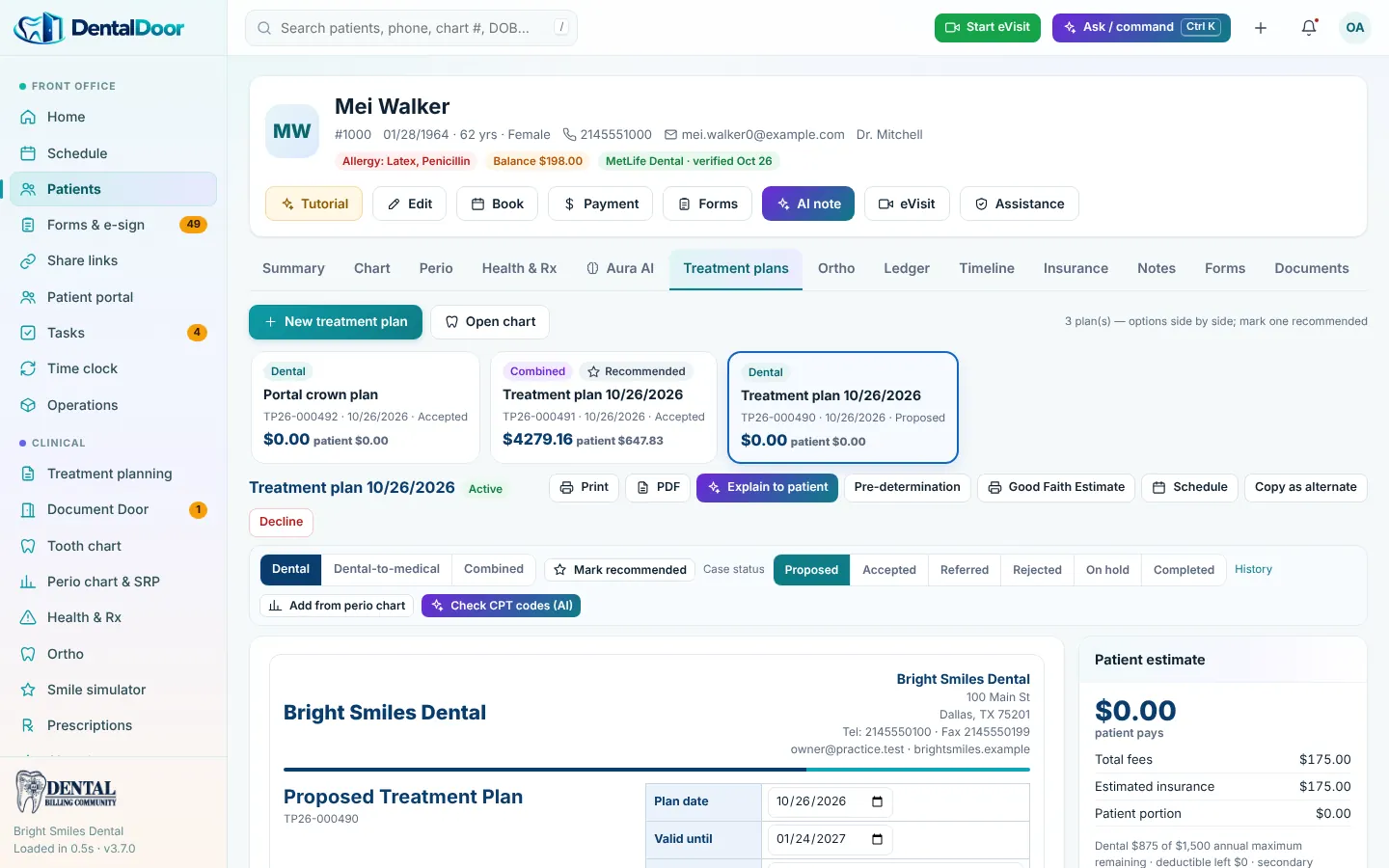
Dental-to-medical in DentalDoor
- One plan with dental and medical phases and coverage estimates
- Pathways for sleep apnea (E0486), biopsy, trauma, TMD and more
- Letter of medical necessity and prior authorization from the plan
See where your revenue is stuck — and how fast it can move.
Thirty minutes on a screen share. A written action plan afterward. No obligation.
Get the daily billing briefing
Coding changes, payer alerts and new case studies — straight to your inbox.
Join the communitySources & further reading
- CMS — LCD L33611 Oral Appliances for Obstructive Sleep Apnea
- AADSM — Oral appliance therapy reimbursement
- ADA News — Medicare claims for dental services require modifiers
- ADA News — CMS highlights medical-dental integration in 2026 PFS
- FCSO (Medicare contractor) — Using the KX modifier for dental services
- CDC — ICD-10-CM files
Educational content only — not legal, coding-certification or payer-specific advice. Code sets (CDT, CPT, ICD-10-CM, HCPCS) and payer policies change; always confirm against the current code manual and the patient's plan. CDT is © American Dental Association. CPT is © American Medical Association.