
Resource · Glossary
Dental terminology, decoded for billing teams
Clear, original definitions of the clinical terms that show up in charts, narratives and claims — with code references where they help.
- 90+ clinical terms in plain English
- Searchable A–Z list
- Code references for billing context
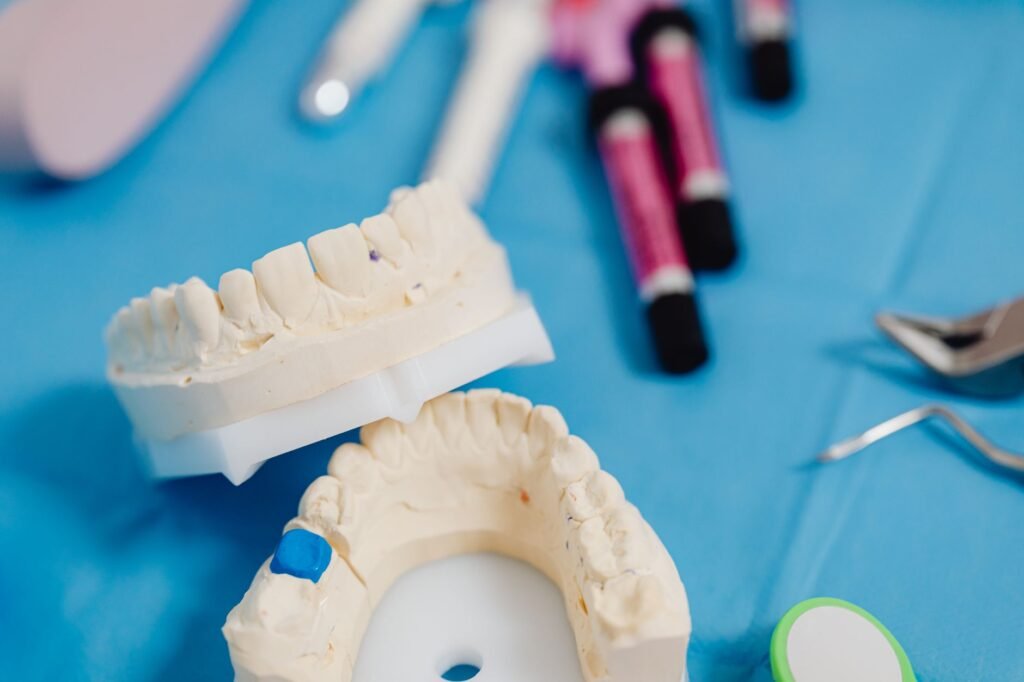 Photo: https://kaboompics.com/ / Pexels
div">
A
- Abscess
- A localized collection of pus caused by infection. In dentistry it is often periapical, near the root tip, or periodontal, in the supporting gum and bone tissues.
- Abutment
- A tooth, implant component or connector that supports and helps retain a crown, bridge, overdenture or other prosthesis.
- Alveolar bone
- The part of the jawbone that contains and supports the tooth sockets.
- Alveoloplasty
- Surgical smoothing or reshaping of the alveolar ridge, often performed to improve healing or prepare the ridge for a denture.
- Amalgam
- A direct filling material made from a dental alloy that includes silver, tin, copper and mercury.
- Anterior teeth
- Incisors and canines. In the Universal/National system, permanent anterior teeth are #6–11 and #22–27; primary anterior teeth are C–H and M–R.
- Apexification
- Endodontic treatment intended to create a hard-tissue barrier at the open root end of an immature tooth with a non-vital pulp.
- Apexogenesis
- Vital pulp therapy for an immature permanent tooth that helps the root continue to develop.
- Apicoectomy
- Endodontic surgery that removes the root tip and usually includes sealing the end of the root.
- Arch
- The upper, maxillary, or lower, mandibular, curve of teeth and supporting ridge.
- Areas of the oral cavity
- Two-digit claim reporting areas: 00 entire mouth, 01 maxillary arch, 02 mandibular arch, and 10, 20, 30 and 40 for the upper-right, upper-left, lower-left and lower-right quadrants.
- Attachment loss
- Loss of periodontal support, commonly measured from the cemento-enamel junction to the base of the periodontal pocket.
B
- Bitewing
- An intraoral radiographic image showing the crowns of upper and lower posterior teeth together, commonly used to evaluate decay between teeth and bone levels.
- Bone replacement graft
- Natural, synthetic or processed material placed to rebuild or preserve bone, such as after extraction or around periodontal defects.
- Bridge (fixed partial denture)
- A non-removable prosthesis that replaces one or more missing teeth with pontics attached to retainers on natural teeth or implants.
- Bruxism
- Grinding or clenching of teeth, which may occur during sleep or while awake.
C
- Calculus
- Hardened plaque on teeth, also called tartar.
- Caries
- Tooth decay caused by demineralization of enamel, dentin or cementum from bacterial acids.
- CBCT (cone-beam CT)
- Three-dimensional imaging of the teeth, jaws and surrounding structures. It may be used for implant planning, endodontics, pathology evaluation, airway assessment and surgical planning when clinically appropriate.
- Cementum
- The thin, mineralized layer covering the tooth root.
- Complete denture
- A removable prosthesis replacing all teeth in one arch.
- Composite resin
- Tooth-colored restorative material that is bonded to the tooth.
- Core build-up
- Material placed to replace missing tooth structure and provide retention or resistance form for a crown. Benefits depend on the plan and documentation.
- Crown
- A restoration that covers the visible portion of a tooth; the term also refers to the anatomical part of the tooth above the gumline.
D
- Debridement
- Removal of plaque, calculus or diseased tissue. Full mouth debridement may be reported with CDT code D4355 when deposits prevent a comprehensive oral evaluation. Verify current CDT guidance and payer policy.
- Dentin
- The tooth layer beneath enamel and cementum and outside the pulp.
- Dentition
- The set of teeth present in the mouth: primary, mixed or permanent.
- Distal
- Away from the midline of the dental arch.
E
- Endodontics
- The dental specialty focused on the pulp, root canals and tissues around the root tip.
- Endosteal implant
- A dental implant placed into the jawbone.
- Extraction
- Removal of a tooth. Common CDT examples include D7140 for routine removal of an erupted tooth and D7210 for surgical removal of an erupted tooth requiring bone removal and/or sectioning; impactions have separate codes. Verify the current CDT manual.
F
- Facial
- The tooth surface facing the cheeks or lips. On posterior teeth it may be called buccal; on anterior teeth it may be called labial.
- Fluoride varnish
- A concentrated fluoride coating painted on teeth to help prevent decay. CDT code D1206 is commonly used for topical fluoride varnish; confirm age limits, frequency and medical necessity rules with the plan.
- Frenectomy
- Surgical removal or release of a frenum, such as a tongue-tie or lip-tie attachment, when clinically indicated.
G
- General anesthesia
- A drug-induced state in which the patient is not arousable, even with painful stimulation, and requires appropriate monitoring and airway management.
- Gingiva
- The gum tissue surrounding the teeth.
- Gingivitis
- Inflammation of the gums without loss of periodontal attachment.
I
- Impacted tooth
- A tooth prevented from erupting normally by bone, soft tissue, another tooth or lack of space.
- Implant-supported crown
- A crown retained by an implant or implant abutment. CDT code selection depends on whether the crown is abutment-supported, implant-supported, screw-retained or cemented. Verify the current CDT manual and payer policy before billing.
- Incisal
- The biting edge of an anterior tooth.
- Inlay
- An indirect restoration that fits within the contours of the tooth and does not cover the cusps.
- Interim therapeutic restoration (ITR)
- A temporary or interim restoration used to control decay, often on primary teeth or in community settings. CDT code D2941 is commonly associated with ITR; verify current CDT guidance and plan rules.
L
- Lingual
- The tooth surface facing the tongue.
- Local anesthesia
- Loss of sensation in a specific area, typically produced by injection or topical application.
M
- Malocclusion
- Misalignment of the teeth or jaws.
- Mandible
- The lower jaw.
- Maxilla
- The upper jaw.
- Mesial
- Toward the midline of the dental arch.
- Moderate sedation
- A drug-induced depressed level of consciousness in which the patient responds purposefully to verbal commands, with or without light tactile stimulation.
- MRONJ
- Medication-related osteonecrosis of the jaw: exposed or probeable jawbone that does not heal as expected and is associated with certain antiresorptive or antiangiogenic medications.
N
- Night guard (occlusal guard)
- A removable appliance intended to protect teeth from grinding or clenching. CDT codes D9944–D9946 may apply depending on the guard type and arch; verify the current CDT manual and payer policy.
O
- Obstructive sleep apnea (OSA)
- Repeated partial or complete collapse of the upper airway during sleep. OSA is diagnosed by a physician; ICD-10-CM G47.33 identifies obstructive sleep apnea. Dental teams should not diagnose OSA for medical billing purposes.
- Occlusal
- The chewing surface of posterior teeth.
- Occlusal orthotic device
- An appliance used for temporomandibular disorder or occlusal therapy. CDT code D7880 may apply for an occlusal orthotic device; confirm current CDT guidance and plan requirements.
- Onlay
- An indirect restoration that covers one or more cusps.
- Oral appliance therapy (OAT)
- Treatment of obstructive sleep apnea with a custom mandibular-advancement appliance. For Medicare, HCPCS E0486 is used for a custom-fabricated oral appliance for OSA only when requirements are met, including physician diagnosis, applicable LCD L33611 criteria and DMEPOS enrollment. Commercial medical plans may use different rules.
- Orthodontics
- The dental specialty focused on correcting tooth and jaw alignment.
P
- Panoramic image
- An extraoral radiographic image showing both jaws and the teeth in one view. CDT code D0330 is commonly used; verify current CDT guidance and payer frequency limits.
- Partial denture
- A removable prosthesis replacing some, but not all, teeth in an arch.
- Periapical image
- An intraoral radiographic image showing the whole tooth and the bone around the root tip.
- Periodontal maintenance
- Ongoing therapy after active periodontal treatment. CDT code D4910 is commonly used; plans vary on frequency, history requirements and documentation.
- Periodontal pocket
- A deepened space between the gum and tooth, often associated with inflammation and attachment loss.
- Periodontitis
- Inflammatory disease that destroys the supporting tissues and bone around teeth.
- Pontic
- The artificial replacement tooth in a bridge.
- Post and core
- A post placed in an endodontically treated canal with a core build-up to help support a crown.
- Posterior teeth
- Premolars and molars.
- Primary dentition
- The 20 baby teeth, labeled A–T in the Universal/National system.
- Prophylaxis
- Preventive removal of plaque, calculus and stain from tooth surfaces. CDT examples include D1110 for adults and D1120 for children; confirm current CDT guidance and plan limits.
- Prosthodontics
- The dental specialty focused on replacing missing teeth and restoring oral function.
- Pulp
- The soft tissue inside the tooth containing nerves, blood vessels and connective tissue.
- Pulpotomy
- Removal of the coronal portion of the pulp while preserving the vitality of the remaining root pulp when clinically appropriate, commonly performed in primary teeth.
Q
- Quadrant
- One quarter of the mouth: upper right, upper left, lower left or lower right.
R
- Radiograph
- An X-ray image used to evaluate teeth, bone and surrounding structures.
- Reline
- Resurfacing the tissue side of a denture to improve fit.
- Root canal therapy
- Endodontic treatment that removes diseased or injured pulp, cleans and shapes the canals, and fills them. CDT codes D3310–D3330 are commonly used by tooth type; verify the current CDT manual.
- Root planing
- Smoothing the root surface to remove calculus and contaminated cementum; it is part of scaling and root planing therapy.
S
- Scaling and root planing (SRP)
- Non-surgical periodontal therapy performed below the gumline. CDT codes D4341 and D4342 are commonly used depending on the number of teeth treated in the quadrant; charting, radiographs and narrative support are often required.
- Sealant
- A resin coating placed in pits and fissures to help prevent decay. CDT code D1351 is commonly used for sealants; payer age, tooth and frequency rules vary.
- Silver diamine fluoride (SDF)
- A medicament applied to a caries lesion to help arrest decay. CDT code D1354 is commonly used for interim caries arresting medicament application; confirm current CDT guidance and plan policy.
- Space maintainer
- An appliance that holds space for an erupting permanent tooth after early loss of a primary tooth.
- Supernumerary tooth
- An extra tooth. In the Universal/National system, permanent supernumerary teeth may be reported with numbers 51–82; primary supernumerary teeth are commonly identified by the primary letter followed by “S.”
T
- Teledentistry
- Delivery or coordination of dental care using telecommunications. CDT code D9995 is commonly used for synchronous teledentistry and D9996 for asynchronous teledentistry; benefits and state rules vary.
- Temporomandibular joint (TMJ)
- The joint connecting the mandible to the skull.
- TMD
- Temporomandibular disorders: conditions involving the jaw joint, chewing muscles and related structures.
- Tooth numbering (Universal/National)
- The system most often used on US dental claims: permanent teeth 1–32, starting at the upper-right third molar, and primary teeth A–T.
V
- Veneer
- A thin facing bonded to the front surface of a tooth, often made of porcelain or composite resin.
X
- Xerostomia
- Dry mouth, which may be related to medications, radiation therapy, systemic disease or reduced salivary flow.
Free billing assessment
See where your revenue is stuck — and how fast it can move.
Thirty minutes on a screen share. A written action plan afterward. No obligation.
Get the daily billing briefing
Coding changes, payer alerts and new case studies — straight to your inbox.
Join the communityEducational content only — not legal, coding-certification or payer-specific advice. Code sets (CDT, CPT, ICD-10-CM, HCPCS) and payer policies change; always confirm against the current code manual and the patient's plan. CDT is © American Dental Association. CPT is © American Medical Association.