Accurate demographics
Subscriber ID, name and date of birth exactly as the payer has them, correct relationship and correct billing/rendering provider NPIs.
Every rejected or denied claim costs staff time to touch again and delays cash. We prepare, scrub and submit claims within one business day of service — with the attachments and narratives payers expect.
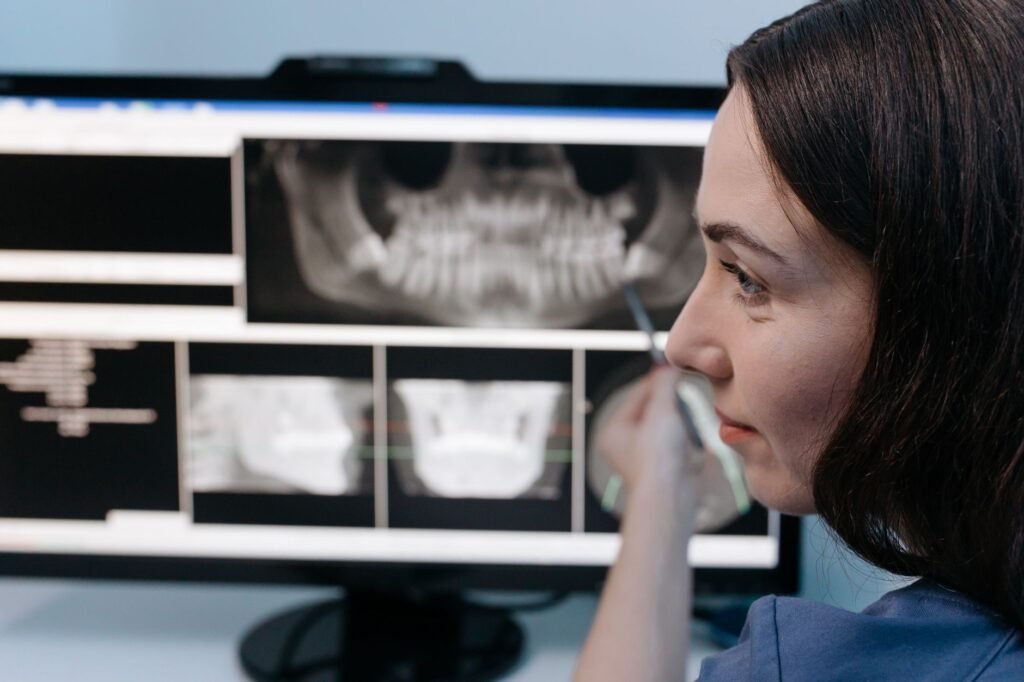 Photo: cottonbro studio / Pexels
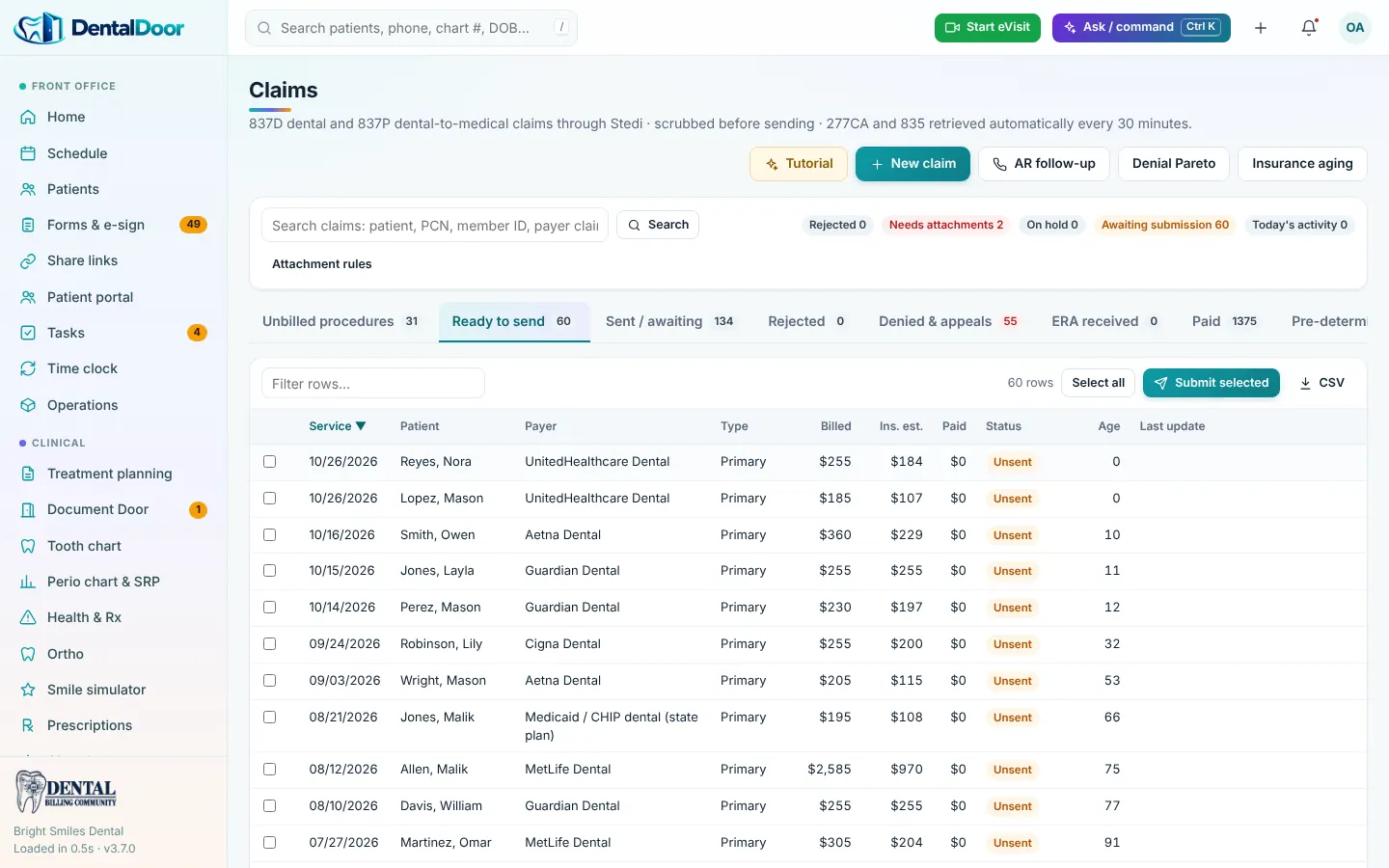
A clean claim has everything the payer needs to adjudicate it without asking for more.
Subscriber ID, name and date of birth exactly as the payer has them, correct relationship and correct billing/rendering provider NPIs.
The code that matches the documented procedure — surfaces, tooth numbers, quadrants and arch where required by the code.
Radiographs, perio charting, intraoral photos and a concise narrative for crowns, build-ups, SRP, implants and anything “by report”.
Primary claim first; secondary claims sent with the primary EOB/ERA details and COB amounts.
Catching problems before the clearinghouse or payer does.
| Layer | What we check | Typical error caught |
|---|---|---|
| Demographics | Subscriber vs. patient, IDs, DOB, address, relationship | Dependent filed under subscriber DOB |
| Provider | Billing vs. rendering NPI, taxonomy, TIN, network status | Associate dentist not yet credentialed with the plan |
| Coding | CDT validity for date of service, tooth/surface/area rules | Retired code used after the annual CDT update |
| Clinical logic | Frequency, history, same-day combinations, age-appropriate codes | Second bitewing series inside the plan’s frequency window |
| Attachments | X-rays, perio chart, photos, narrative present and legible | Crown billed without pre-op radiograph |
| Payer edits | Plan-specific rules and known downgrade patterns | Posterior composite downgraded to amalgam |
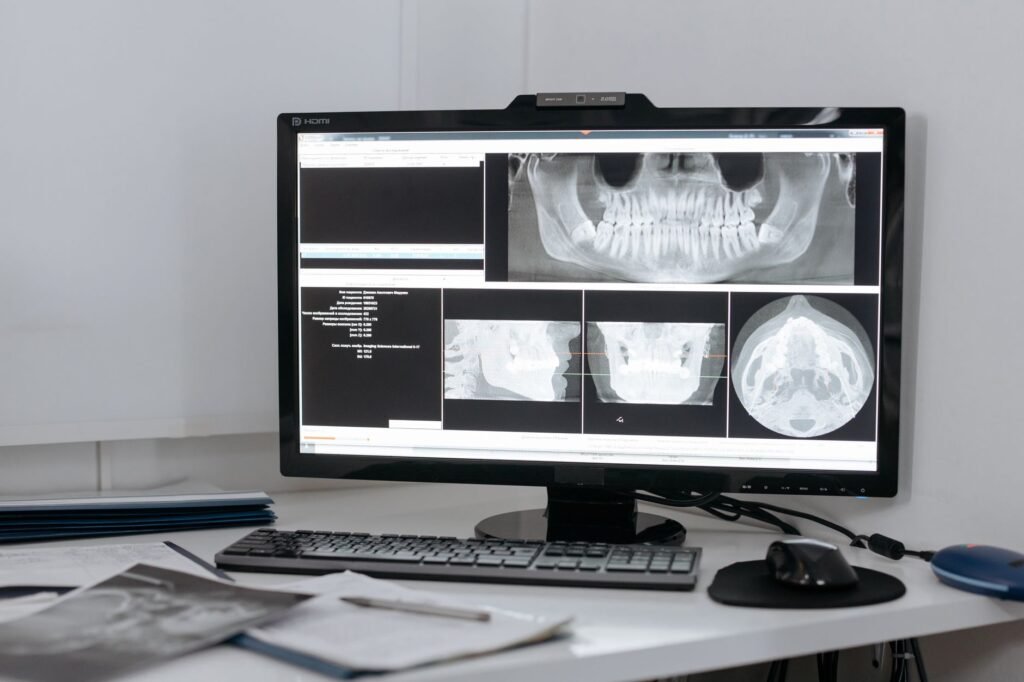 Photo: cottonbro studio / Pexels
Payer reviewers look for three things: why the procedure was necessary, what the clinical evidence shows, and why now. We build narratives from your clinical notes using a consistent structure and keep a library of approved language per procedure type.
CDT updates take effect every January 1 and claims must use the code set valid on the date of service.
CDT 2026 brought 31 new codes, 14 revisions and 6 deletions. Notable changes include the deletion of D1352 (preventive resin restoration) after the D2391 descriptor was revised to no longer depend on lesion depth, and the deletion of D9248 (non-IV conscious sedation), replaced by new anesthesia codes. We update scrub rules every year before January claims go out.
Yes — through your existing clearinghouse wherever possible, with electronic attachments. Paper claims are prepared only for payers that require them.
Clearinghouse rejections are worked daily. Because a rejected claim never reached the payer, fixing it quickly protects timely-filing deadlines.
Yes. For dental services that Medicare covers because they are inextricably linked to a covered medical service, claims need the correct modifier (KX when coverage criteria are met) and a diagnosis code. We confirm the documentation of physician coordination before submission.
Six reasons practices across the US hand us their revenue cycle.
Our team works only in dental revenue cycle — CDT, dental plans, Medicaid dental and the payers your practice actually bills.
We bill the medical plan when it should pay — oral surgery, trauma, biopsies, TMD and oral appliance therapy — with compliant cross-coding.
Automation speeds verification, scrubbing and follow-up; experienced billers review every exception.
Monthly KPI reviews plus live verification and AR dashboards. You always see where every claim stands.
BAA with every client, named logins, MFA where supported and minimum-necessary access.
Verification, coding, claims, AR, denials, posting, patient billing and credentialing — no hand-offs between vendors.

Thirty minutes on a screen share. A written action plan afterward. No obligation.
Coding changes, payer alerts and new case studies — straight to your inbox.
Join the communityEducational content only — not legal, coding-certification or payer-specific advice. Code sets (CDT, CPT, ICD-10-CM, HCPCS) and payer policies change; always confirm against the current code manual and the patient's plan. CDT is © American Dental Association. CPT is © American Medical Association.