The Teledentistry Revenue Crisis: $200K-$1M Annual OpportunityTeledentistry Revenue Crisis
The Teledentistry Revenue Crisis: $200K-$1M Annual Opportunity
Teledentistry and Virtual Dental Home models represent the future of dental care delivery—yet 85-95% of dental practices have not adopted teledentistry billing and coding, losing $200,000-$1,000,000+ annually through missed telehealth opportunities, incorrect coding, inadequate insurance reimbursement, and failure to leverage remote care models. Transform missed opportunities into extraordinary revenue growth.
90%
Don't Use Teledentistry
85%
Unfamiliar With D9995/D9996
$500K
Average Opportunity Cost
800%+
Maximum ROI Potential
Understanding Teledentistry & Virtual Dental Home Models
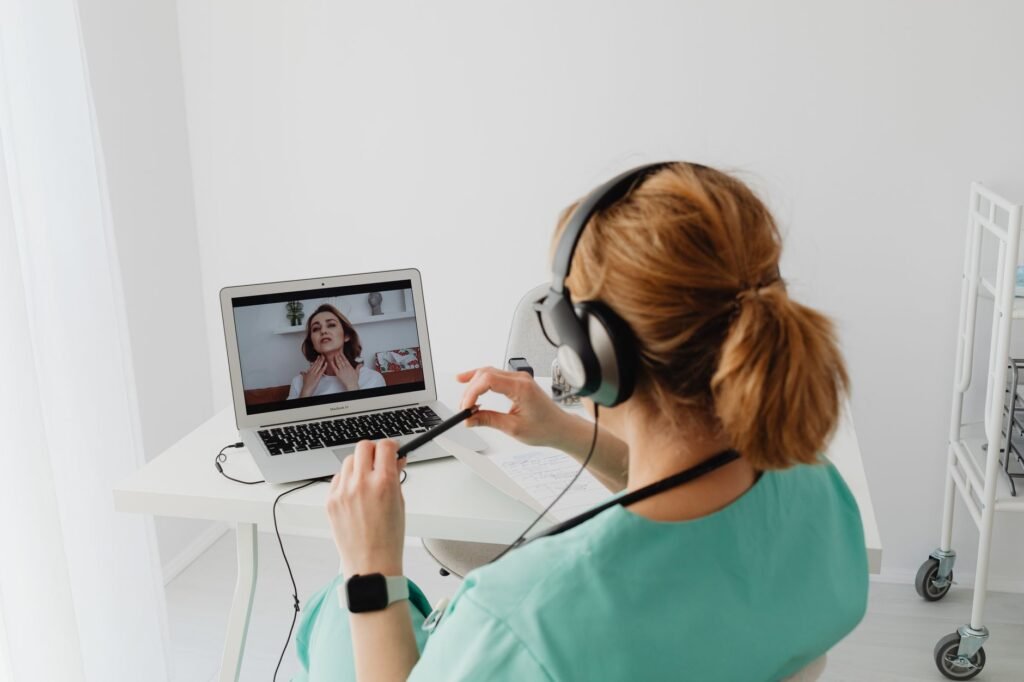
Teledentistry encompasses remote dental care delivery through synchronous real-time consultations, asynchronous store-and-forward assessments, and Virtual Dental Home models where dental hygienists provide services at community locations under remote dentist supervision. Synchronous (D9995) and asynchronous (D9996) billing codes form the foundation.
Two Primary Teledentistry Models
Synchronous Teledentistry (D9995)
Real-time video consultation with immediate interaction
High-definition HIPAA-compliant video platform required
Reimbursement: $50-$150 per visit
Best for consultations, follow-ups, urgent assessments
Store-and-forward model with delayed provider response
Patients submit photos/videos via secure portal
Reimbursement: $25-$75 per submission
Best for triage, initial screening, non-urgent cases
Higher volume of assessments possible per provider
Annual practice revenue potential: $75K-$300K+
Virtual Dental Home (VDH) Model
Community-based preventive delivery where dental hygienists provide services at schools, senior centers, or mobile clinics while dentists provide remote supervision via technology. Dramatically extends practice reach to underserved populations, creates new revenue streams, and improves population health through preventive focus.
School Programs
Preventive services at schools
Rural Access
Services in underserved areas
Senior Facilities
Care at assisted living homes
Community Centers
Mobile clinics and locations
The Teledentistry Crisis
90% of practices don't utilize teledentistry services at all
85% unfamiliar with D9995 and D9996 billing codes
Services unbilled or underbilled due to coding errors
Incorrect coding for synchronous vs. asynchronous services
Insurance reimbursement denied due to coding mistakes
Virtual Dental Home opportunities completely missed
$200,000-$1,000,000+ annual revenue lost per practice
Financial Impact: ROI ranges from 300%-800%+ for standard teledentistry programs to 1,000%+ for comprehensive multi-location VDH networks. Practices with teledentistry expertise gain market share from 90%+ of non-adopters while generating $1-$3M+ in annual revenue.
Teledentistry Codes & Billing Fundamentals
D9995 vs. D9996: Critical Code Selection
Selecting the correct code between D9995 (synchronous) and D9996 (asynchronous) is critical for billing accuracy. Incorrect code selection leads to claim denials, underpayment, or compliance issues. Documentation must clearly reflect which type of service was provided.
Synchronous
D9995 Real-Time Visit
Live video consultation with immediate interaction. Requires high-definition secure video platform. HIPAA compliance mandatory. Reimbursement: $50-$150. Best for urgent consultations.
Asynchronous
D9996 Store-and-Forward
Patient submits information; provider reviews later. Secure portal required. Reimbursement: $25-$75. Best for triage and initial assessment. Higher volume processing possible.
Comprehensive Documentation Requirements
Inadequate documentation is a leading cause of claim denials. Teledentistry visit notes must capture clinical information, technology details, and visit specifics supporting billing and ensuring compliance.
Date & Time
Exact date, time, duration documented
Technology Platform
Platform used with HIPAA compliance
Patient Verification
Identity verification and informed consent
Clinical Findings
All assessments and observations noted
Documentation Impact: Proper documentation supports payment and provides legal protection. Inadequate documentation results in denied claims, audit failures, and liability. Investment in thorough documentation protocols protects revenue and ensures compliance.
Technology Requirements & State Regulations
Essential Technology Requirements
Teledentistry technology must meet rigorous standards. The platform CANNOT be a consumer app like Zoom or FaceTime—it must be HIPAA-compliant healthcare-specific platform. Technology compliance is a legal requirement for reimbursement.
HIPAA-Compliant
Healthcare-specific platform required
End-to-End Encryption
Secure data transmission mandatory
Patient Authentication
Identity verification systems required
Secure Storage
Backup and disaster recovery included
State Regulations: Critical Compliance
State regulations for teledentistry vary significantly. Some embrace teledentistry with minimal restrictions; others impose scope limitations, supervision requirements, and prescribing restrictions. Understanding your state's specific requirements is critical for legal practice.
Regulatory Considerations
State licensing requirements
Supervision requirements (remote vs. direct)
Scope of services permitted via telehealth
Prescribing authority limitations
Interstate practice restrictions
Informed consent mandate requirements
Specific documentation standards
Compliance Essential
Research state requirements thoroughly
Develop compliant operational protocols
Monitor regulatory updates continuously
Maintain documentation of compliance
Train staff on state-specific rules
Update policies as regulations evolve
Consult legal counsel for complex situations
Insurance Coverage & Pre-Authorization Management
Teledentistry Insurance Coverage Variations
Insurance coverage for teledentistry varies dramatically by payer. While the pandemic accelerated coverage expansion, significant variation remains across insurers. Some offer comprehensive coverage; others provide limited coverage or exclude services entirely.
Pre-Pandemic
Limited coverage, mostly excluded
Pandemic Era
Rapid coverage expansion occurred
Post-Pandemic
Many policies made permanent
Future Trend
Continued expansion expected
Pre-Authorization Process
Some insurance companies require pre-authorization before teledentistry services are provided. Pre-authorization is the insurer's advance approval that the service is medically necessary and covered. Failing to obtain required pre-authorization results in automatic claim denial.
Contact Insurance
Before service delivery
Verify Coverage
Confirm codes covered for patient
Get Authorization
Obtain auth number if required
Document Reference
Reference auth on all claims
Pre-Verification Essential: Before providing teledentistry services, verify coverage with patient's insurance. Confirm which codes are covered (D9995, D9996, or both), determine reimbursement rates, check pre-authorization requirements, and understand service limitations. Verification prevents claim denials and patient billing disputes.
Virtual Dental Home & Remote Supervision Models
VDH Model Components
Virtual Dental Home dramatically extends practice reach to underserved populations through community-based service delivery with remote dentist supervision. A single dentist can supervise 3-5 VDH locations simultaneously.
Community Location
School, mobile van, senior center, or community clinic where services delivered
On-Site Provider
Dental hygienist or therapist at location providing preventive services
Remote Supervision
Dentist supervises via secure video technology in real-time or asynchronously
Preventive Services
Cleanings, sealants, fluoride, screenings, radiographs, and expanded scope procedures
School-Based VDH Programs: Highest Impact
School-based programs represent one of the highest-impact teledentistry applications, bringing preventive services directly to children in their school environment with significant revenue potential through service fees, grants, and public health funding.
Program Benefits
Reaches entire student population
Eliminates transportation barriers
No parental work time lost
Preventive focus improves health
Reduces emergency room visits
Improves school attendance
Grant funding often available
Revenue Streams
Insurance reimbursement for services
Grant funding from foundations/govt
School district budget allocations
Public health program payments
Patient acquisition for main office
Community reputation building
$300K-$800K+ annual potential
Expanded Scope: Hygienist ITR Placement
Interim Therapeutic Restoration (ITR) by hygienists under remote supervision addresses cavities in underserved populations when immediate access to restorative care is unavailable. Particularly valuable in school-based VDH settings.
Expanded Scope Impact: ITR services create new revenue while preventive focus reduces future treatment needs. ITR programs in schools generate $50K-$200K+ annually per location while significantly improving child oral health outcomes. Requires state authorization.
Remote Supervision & Multi-Location Networks
Remote Supervision Process
Remote supervision enables dental hygienists to provide services at off-site locations under dentist supervision via secure technology rather than physical presence. Fundamental to VDH operations and expanded access programs.
Service Delivery
Hygienist performs at community location
Real-Time Observation
Dentist observes via video or reviews submissions
Clinical Direction
Dentist provides guidance as needed
Documentation
Supervision details recorded in file
Multi-Location VDH Network Strategy
Highest revenue potential comes from multi-location VDH networks where single practice operates multiple community sites under centralized management and remote supervision. Each location generates $200K-$500K+ annually.
Network Advantages
Shared infrastructure and equipment costs
Centralized scheduling and administration
Single dentist supervises multiple locations
Consistent protocols and quality standards
Bulk purchasing and vendor negotiation
Diversified revenue streams reduce risk
Community impact and reputation enhancement
Financial Model
Per location annual: $200K-$500K
5-location network: $1M-$2.5M
Dentist supervision: 3-5 locations
Net margin: 35-50% after costs
ROI timeline: 18-24 months per location
Proven scalability for expansion
Exponential growth potential
AI-Powered Teledentistry Revolution
Artificial intelligence revolutionizes teledentistry by automating coding, documentation, insurance verification, scheduling, and patient communication. AI tools achieve 99%+ accuracy while reducing administrative costs by 40-60%.
Core AI-Powered Systems
AI ENGINE
TeledentistryCodeMaster AI™
Automatic code selection with 99%+ accuracy. Analyzes service type, documentation, insurance policies. Instantly recommends correct D9995 or D9996 code. Cost: $2,500-$3,500/month. Benefit: $150K-$600K annually.
AI ENGINE
DocumentationGenius AI™
Real-time transcription and automatic visit note generation. Extracts clinical findings, ensures compliance, formats for billing. Reduces documentation time by 70%. Cost: $2,200-$3,200/month. Benefit: $130K-$500K annually.
Continuous compliance monitoring of all documentation. Identifies gaps, flags coding errors, ensures regulatory compliance, monitors state requirements. Cost: $2,000-$2,800/month. Benefit: $120K-$400K annually.
AI ENGINE
PreAuthAccelerator AI™
Automated pre-authorization identification and submission. Tracks authorization status, alerts on expirations, maintains documentation. Cost: $1,800-$2,600/month. Benefit: $110K-$380K annually.
COMPLETE
Complete AI Suite (10+ Tools)
All systems integrated for total automation. Scheduling, analytics, clinical support, billing, collections. Cost: $8K-$12K/month. Benefit: $800K-$2M+ annually. ROI: 700%-2,000%.
AI Performance Metrics: 99%+ coding accuracy, 95% staff time reduction, 40-60% fewer denials, $400K maximum annual value prevented, 2-second processing speed per procedure. Practices with full AI suite capture 40-60% more revenue than manual processes.
Comprehensive Teledentistry Service Packages
Service Tier Options & Investment Returns
Starter Setup
$1.5K–$2.2K
Per Month
Platform setup & training
Insurance verification support
Documentation templates
Coding guidance
$100K-$300K annual | 4,500%-13,600% ROI
Professional
$2.8K–$4.2K
Per Month
Comprehensive setup
Staff training & integration
3 AI tools included
Ongoing support
$250K-$700K annual | 6,500%-20,800% ROI
School Program
$2.5K–$3.5K
Per Month
Partnership development
Grant writing & funding
Hygienist supervision
Outcomes tracking
$300K-$800K annual | 8,000%-32,000% ROI
Enhanced
$3.2K–$4.8K
Per Month
VDH program development
5 AI tools deployed
Specialist support
Monthly optimization
$400K-$900K annual | 7,000%-27,000% ROI
Multi-Location
$4K–$6K
Per Month
Multiple VDH locations
Coordination & oversight
Network compliance
Performance optimization
$600K-$1.5M annual | 10,000%-37,500% ROI
Enterprise
$6K–$8.5K
Per Month
All 10+ AI tools
6-8 specialist team
24/7 real-time support
Strategic consulting
$800K-$2M annual | 8,000%-40,000% ROI
Complete Transformation System
$7.5K–$12K
Per Month | ENTERPRISE PRICING
Complete VDH networks
All AI systems fully deployed
8-10 specialist team
24/7 monitoring and support
Grant writing and funding acquisition
Strategic growth consulting
$1.2M-$3M+ annual | 9,600%-48,000% ROI | 95% Success Rate
Service Tier Selection Guide: Choose based on practice size, patient volume, growth goals, and teledentistry experience. Most practices start with Professional or Enhanced tier and scale to Enterprise as revenue grows and additional locations expand.
Five Strategic Value Propositions
Market Expansion
Reach underserved populations and extend geographic reach 200%+
Financial Growth
$200K-$1M+ annual revenue with 300%-800%+ ROI
Competitive Advantage
Early adoption leadership over 90% of non-adopters
Operational Efficiency
95%+ automation, 40-60% cost reduction
Patient Satisfaction
85-95% satisfaction with improved access
Community Impact
Population health improvement and social responsibility
Ready to Capture Your Teledentistry Opportunity?
Every month of delay costs $15K-$70K+ in lost teledentistry revenue. With 90%+ of practices not yet adopted, now is the time for early-mover advantage. Get your complimentary teledentistry opportunity assessment today.